


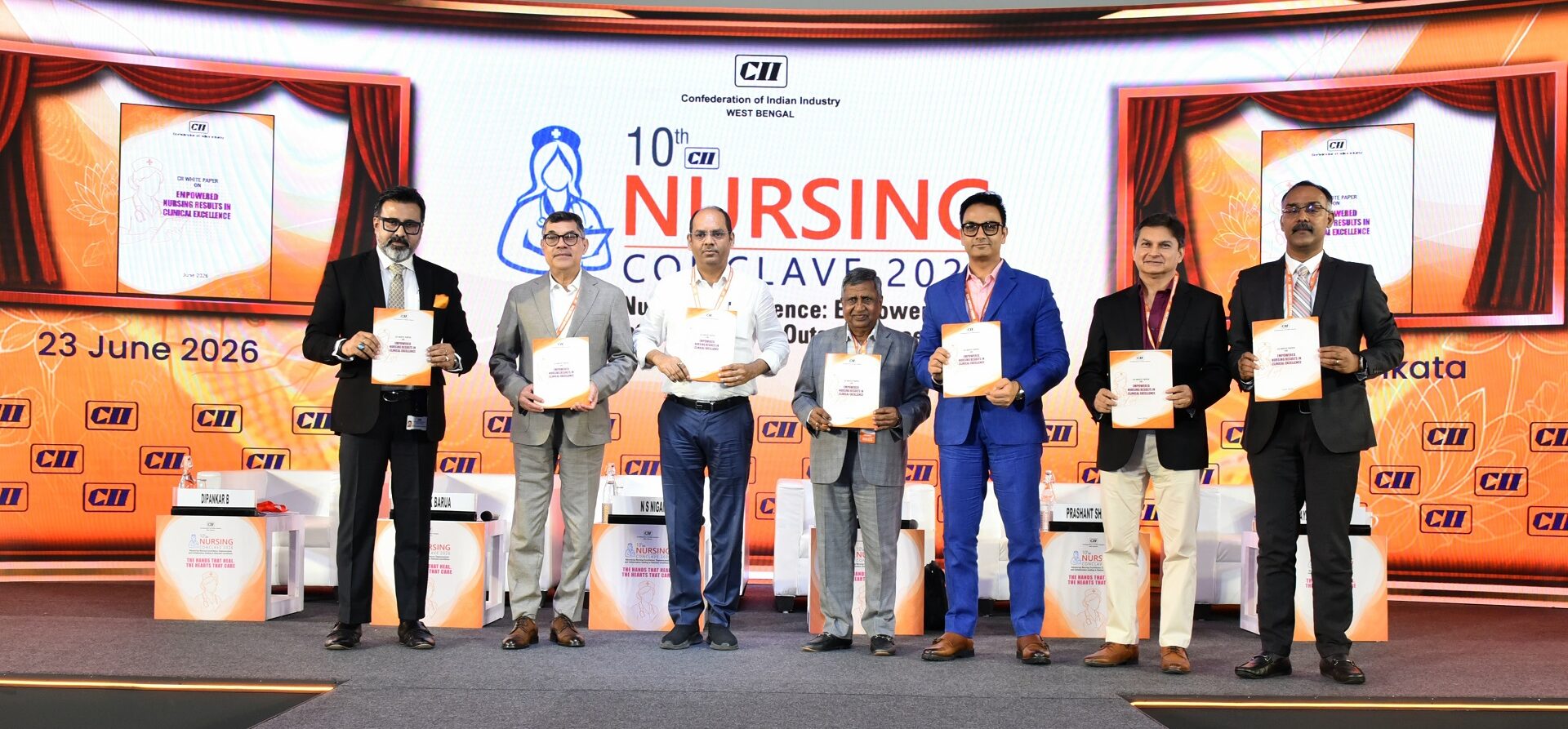
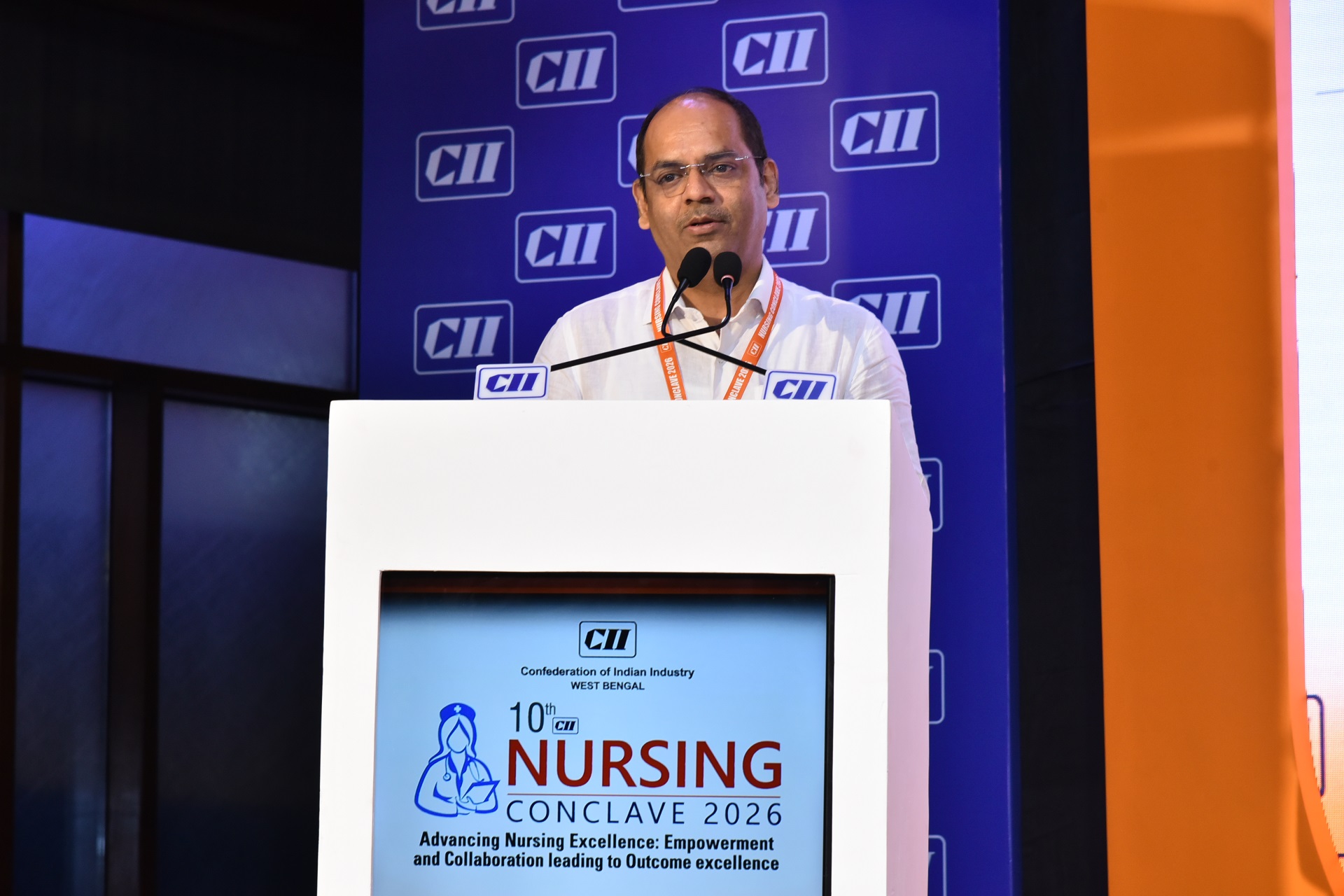
 While speaking at the 10th Edition of the CII Nursing Conclave 2026, Shri N. S. Nigam, IAS, Principal Secretary, Department of Health & Family Welfare, Government of West Bengal, opined that the conclave has evolved into a valuable platform for bringing together diverse perspectives on healthcare and stressed the need for reforms in nursing education, working conditions, and regulation to strengthen the profession and ensure equitable access to quality healthcare for all.
“The goal of building a healthier society cannot be achieved by doctors and paramedics alone. It begins within families and communities and extends to hospitals and healthcare institutions. We must move beyond treatment and embrace the broader concept of wellness. According to the National Health Accounts Report, West Bengal spends nearly ₹70,000–80,000 crore annually on healthcare. Ensuring equitable access to quality healthcare remains a significant challenge, particularly for those who cannot afford rising medical expenses,” he said.
Mr Nigam added, “Nursing care is one of the most important pillars of healthcare delivery, whether in community health centers, operating theaters, or tertiary care hospitals. To strengthen the profession, we must focus on three key areas: specialization, working conditions, and regulation. There is a strong case for introducing specialized nursing streams, improving workplace conditions, and strengthening accreditation and regulatory mechanisms. Reforms must be undertaken holistically to ensure equitable and accessible healthcare for all.”
Dr. T. Dileep Kumar, President, Indian Nursing Council, noted, “India has made considerable progress in strengthening its nursing workforce and is moving closer to the benchmarks recommended by the World Health Organization. However, there is still a long way to go. The quality of nursing education remains a key concern. India currently has more than 4.29 million registered nursing personnel, while around 1.4 million professionals have enrolled under the National Register Tracking System. The creation of a live register will help eliminate duplication and provide accurate workforce data.”
Mr. Kumar added, “West Bengal has emerged as a leader in nursing digitalization. More than 1,600 primary registrations have already taken place in the state, and its nursing registry model is among the best in the country. I have recommended that this model be considered for adoption at the national level. At the same time, policy interventions are needed in West Bengal to ensure that nursing students have access to quality educational opportunities within the state and do not need to migrate elsewhere for training.”
“Healthcare systems across the world are facing significant challenges, with economic uncertainty affecting spending on the social sector. In such a scenario, the role of nurses becomes even more critical, particularly in addressing communicable diseases and ensuring quality patient care. The conclave serves as an inspiring platform to showcase best practices in healthcare delivery and nursing excellence. I hope these discussions will pave the way for meaningful collaborations and innovations in the sector,” said Mr Rupak Barua, Chairman, CII West Bengal State Council and Managing Director & CEO, Woodlands Multispeciality Hospital.
“‘Swasth Bengal’ is integral to achieving a ‘Swasth Bharat’. It is about redefining healthcare through innovation, accessibility, and inclusivity. West Bengal has made significant progress in strengthening its nursing ecosystem. As of 31 March 2025, the state has 261 nursing educational institutions, including 88 government-run and 173 private institutions. It is home to more than 72,000 auxiliary nurse midwives, nearly 1 lakh registered nurses and registered midwives, and over 12,800 lady health visitors. These are not just numbers; they represent the dedicated workforce that ensures healthcare reaches every section of society. Advancing nursing excellence in West Bengal is not merely an aspiration but a shared commitment,” noted Mr Prashant Sharma, Chairman, CII West Bengal Healthcare Taskforce and Managing Director, Charnock Hospital.
“Technology integration and the adoption of artificial intelligence are set to transform the nursing profession and healthcare delivery. However, technological advancement must be complemented by a strong focus on the quality of nursing education, which remains fundamental to building a skilled and future-ready workforce,” stated Dr Ayanabh Debgupta, Co-Chairman, CII West Bengal Healthcare Taskforce and Regional Director—East Region, Manipal Hospitals.
The 10th Edition of the CII Nursing Conclave 2026, held in Kolkata on Tuesday, witnessed the participation of over 450 delegates, including healthcare leaders, nursing professionals, academicians, and industry stakeholders, who came together to discuss the future of nursing and healthcare delivery. The conclave also featured the unveiling of a whitepaper, “Empowered Nursing Results in Clinical Excellence,” along with sessions on Nursing Excellence in Driving Patient Outcomes, Empowering Nursing Across Diverse Roles and Specializations, and The Essence of Nursing Care: Compassion, Care & Changing Care Delivery.