


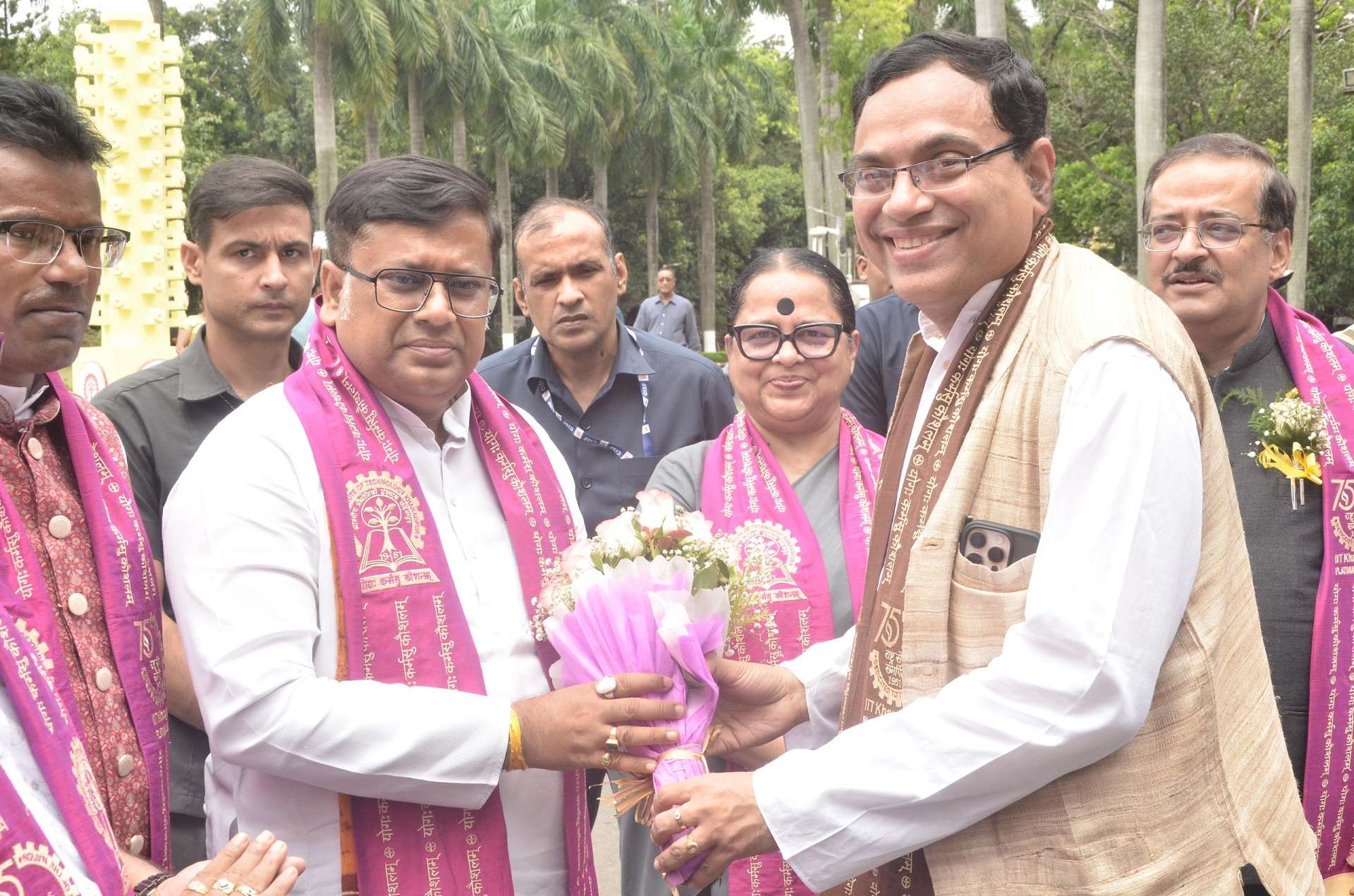
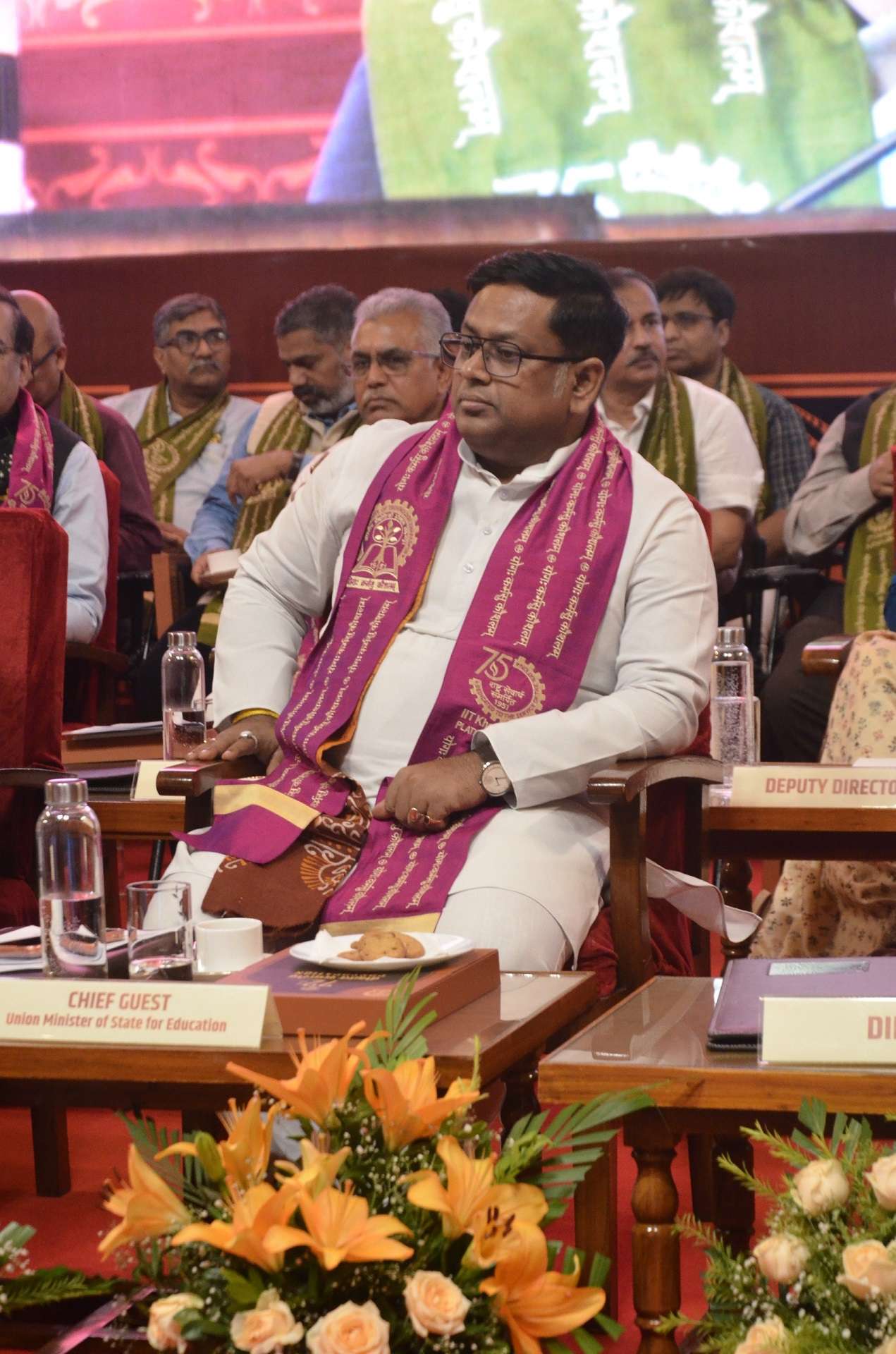
 This day is a day of celebration. It marks the culmination of years of perseverance, discipline, and sacrifice—your own, and equally that of your parents, teachers, and families who have walked this journey with you. The past year marked the beginning of a long-term institutional transformation aimed at positioning IIT Kharagpur as a globally consequential multidisciplinary technological university. Guided by a mission-oriented strategy anchored on five interconnected pillars—People, Purpose, Partnerships, Prosperity and Positioning—the Institute undertook a series of integrated reforms to strengthen academic excellence while significantly enhancing societal impact through education, research, innovation, healthcare and global engagement.
The Institute further accelerated implementation of the National Education Policy (NEP) 2020 by expanding academic flexibility and learner-centric education. More than 14,285 students created Academic Bank of Credits (ABC) IDs, of which over 11,275 have already been validated. Students benefited from multiple, logically designed academic exit pathways leading to certificate, diploma and pass degree options, thereby enhancing flexibility without compromising academic rigour. Double-major programmes, interdisciplinary minors and twenty-five micro-specialisations were expanded across disciplines. The Senate also approved the Sports Excellence Admission (SEA) and Science Olympiad Excellence (ScOpE) schemes for undergraduate admissions from the academic session 2026–27, broadening avenues for attracting exceptional talent.
Transformational reforms were simultaneously introduced in postgraduate and doctoral education. Rolling Ph.D. admissions, flexible eligibility criteria, digitised thesis processing, streamlined evaluation mechanisms and an Innovation and Technology Development doctoral pathway collectively strengthened research training while creating stronger linkages between scientific discovery, technology translation and entrepreneurship. Human capital development remained a central institutional priority. Between October 2025 and June 2026, 39 selection committees selected 249 faculty members, comprising 50 professors, 55 associate professors and 144 assistant professors, including 151 fresh recruits. The Institute also witnessed an unprecedented expansion of its postdoctoral ecosystem, with more than 450 offers issued and over 339 postdoctoral fellows joining during the year. Transparent, board-approved policies governing emeritus, visiting, adjunct and distinguished visiting professors were operationalised, while more than one hundred long-pending faculty confirmation and career progression cases were successfully resolved, substantially strengthening academic capacity and institutional confidence.
Student wellbeing received unprecedented institutional attention during the year. The comprehensive SETU Wellbeing Framework was implemented through expanded counselling services, enhanced psychiatric support, AI-enabled digital companions, the MITRA faculty mentoring initiative and the SAARTHI peer mentoring programme. These initiatives assumed particular significance against the backdrop of increasing national concern over student mental health and the tragic loss of young lives across premier educational institutions due to academic, personal and career-related stress, percolating down to the loss of several lives out of frustration in the preparatory stages of highly competitive entrance examinations. Recognising that academic excellence must be accompanied by institutional compassion, IIT Kharagpur further strengthened academic recovery mechanisms, flexible progression pathways and early-warning systems to identify and support vulnerable students proactively, combining AI-empowered red flagging and human touch.
Research activity continued to grow across disciplines. During the year, the Institute secured 336 sponsored research projects with sanctioned funding of approximately ₹359 crore and executed 275 industrial consultancy projects worth nearly ₹55 crore. More than 1,400 sponsored research and consultancy projects remained active, reflecting the breadth and vitality of the institute’s research enterprise. Research training also expanded significantly, with the award of 524 Ph.D. and 31 M.S. degrees during the year. The first batch of Ph.D. students from the IIT Kharagpur – University of Manchester Joint Ph.D. programme is graduating this year. Digitisation and process reforms reduced the average thesis evaluation period by nearly 40%, from approximately four months to about two and a half months, enabling faster graduation without compromising academic quality.
Major reforms were undertaken to establish an integrated research-to-market innovation ecosystem. Innovation governance, technology translation, incubation, entrepreneurship support and industrial partnerships were aligned within a unified institutional framework. Policies supporting faculty entrepreneurship, startup creation, venture capital engagement, intellectual property management and technology commercialisation were significantly strengthened. The Research Park at Rajarhat, Kolkata, further evolved into an integrated deep-technology innovation district fostering translational research, startup growth and industrial collaboration. Healthcare emerged as one of the Institute’s most important strategic priorities through the development of a comprehensive engineering–medicine ecosystem. The Faculty of Integrated Health Science and Technology was established to promote interdisciplinary convergence across engineering, medicine, biology and artificial intelligence. Development of the B.C. Roy Medical School progressed with the proposal for postgraduate medical programmes currently pending with the National Medical Council for clearance, while the Dr Syama Prasad Mookerjee Superspeciality Hospital substantially expanded its diagnostic, outpatient and daycare surgical services. A mission-mode roadmap has been initiated to develop the hospital into a modern indoor facility of at least 220 beds, ultimately operating within a carefully designed public–private partnership framework while preserving the institute’s academic leadership.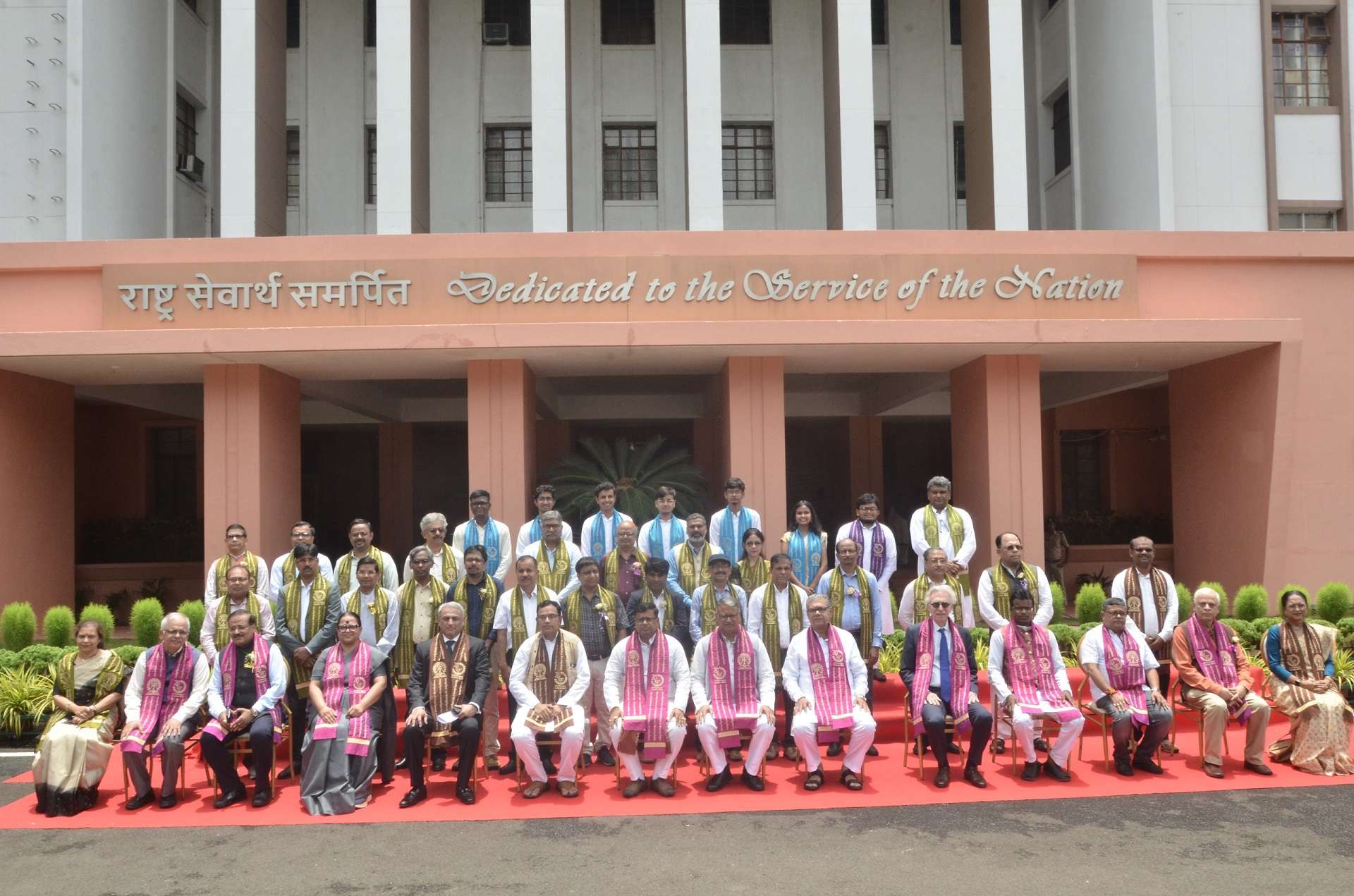
The Institute substantially expanded its national outreach through the Outreach Course Network (OCN), developing twenty-three micro-specialisation programmes involving more than fifteen academic units to deliver IIT-quality education with uncompromising academic rigour to partner institutions across the country. Complementing this initiative, the Strategic Outreach Centre (SOC) framework was conceptualised to establish distributed institutional nodes for research collaboration, executive education, innovation and alumni engagement, with the first international centre proposed in Houston. International engagement continued to strengthen across research, education and innovation. The institute hosted 70 international students, processed more than 160 international memoranda of understanding and welcomed over 260 visiting international faculty members and researchers. The first cohort under the Joint Dual Award Ph.D. programme with the University of Manchester graduated during the year, marking an important milestone in international doctoral education. IIT Kharagpur also achieved the highest score among all Indian IITs in the International Research Network indicator of the QS World University Rankings 2027. Reflecting this strengthened global standing, the Institute advanced ten positions to attain an overall QS World University Ranking of 205, reinforcing its emergence as one of the world’s leading multidisciplinary technological universities.
Let me not continue to burden you more with numbers and data of the past year’s saga, which are otherwise available in the published director’s report. I would rather take this opportunity to share some of my subtle insights. My dear students, today you receive degrees from one of the iconic technological universities. But I believe something far more profound is taking place. You are graduating into one of the greatest civilisational transitions in human history. Every few centuries, humanity reaches an inflection point that fundamentally reshapes the course of civilisation. Agriculture transformed societies, the Industrial Revolution multiplied human capability, electricity illuminated the world, computing expanded the reach of the human mind, and the Internet connected humanity on an unprecedented scale. Artificial intelligence is different. For the first time, humanity has created machines that increasingly participate in the very activity we once believed to be uniquely human—the generation, interpretation, and application of knowledge. Previous technologies amplified physical capability; artificial intelligence amplifies cognitive capability.
You, the graduating class of 2026, stand precisely at that historic intersection. Many commencement speakers ask graduates to prepare for the future. I believe something even more remarkable is unfolding today—the future is preparing itself for you. Every graduating class enters a changing world. Yours enters a world that is changing itself. Artificial intelligence, quantum technologies, healthcare technologies, and intelligent manufacturing are transforming every sector of society even as humanity confronts climate change, healthcare inequities, cyber insecurity, and complex ethical challenges. Never before have technological possibilities expanded so rapidly, nor have the responsibilities accompanying them become so profound. That is what makes your generation unique. You will be the first generation to work alongside machines capable of learning, reasoning, and creating. More importantly, you will be the generation that determines whether these technologies expand opportunity or deepen inequality, strengthen humanity or weaken it. Technology will create possibilities; your generation will determine their purpose.
Today, society is doing far more than conferring degrees upon nearly four thousand graduates. It is placing its confidence in a generation that will design the technologies, institutions, and ideas upon which the coming decades will be built. Whatever path you choose, your work will shape not only your own future but also the future of society itself. And that is precisely why your IIT education matters more today than at any previous moment in history. Because if intelligence itself is becoming abundant, what, then, becomes the true purpose of an IIT education? That, I believe, is the defining educational question of our time.
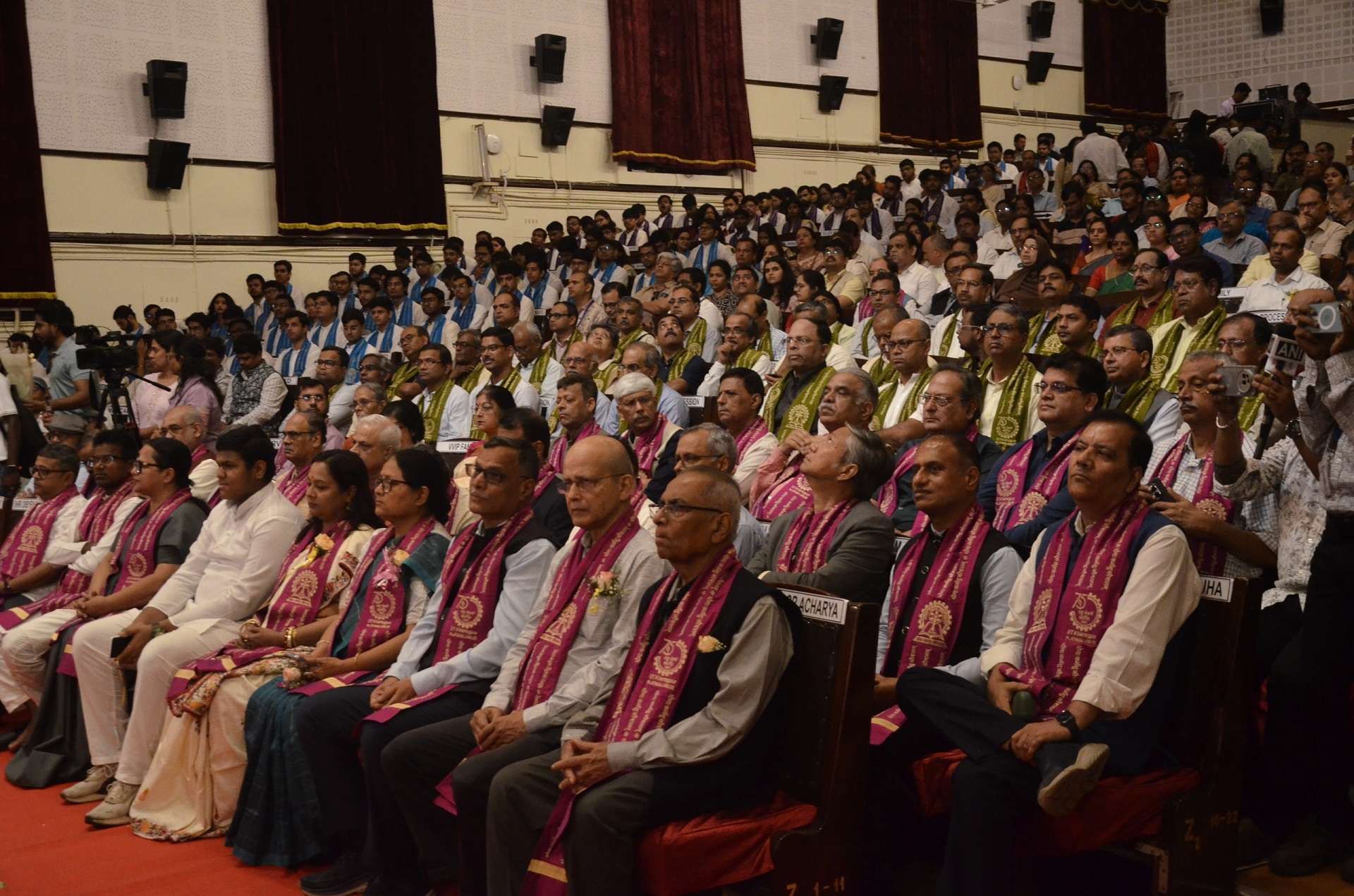
Why Your IIT Degree Matters More Than Ever
The extraordinary age into which you graduate raises a fundamental question: what does an IIT education mean when artificial intelligence can retrieve information, write software, analyse data and solve increasingly complex problems? For centuries, universities were valued because they were custodians of knowledge. Today, information is abundant and increasingly democratised. If education were merely about acquiring knowledge, universities would indeed become less relevant. Paradoxically, the opposite is true. The age of artificial intelligence makes great universities more important than ever because their highest purpose was never simply to transfer knowledge—it was to cultivate judgement.
Universities develop intellectual discipline, scientific curiosity, ethical responsibility and the courage to question accepted assumptions. They prepare individuals not merely to solve problems but to decide which problems are worth solving. In the decades ahead, information will be abundant, but judgement will remain scarce; computation will become limitless, but wisdom will remain uniquely human. Artificial intelligence may generate answers with extraordinary speed, but it cannot decide what humanity ought to value, what principles should guide our choices or what future we should build. That responsibility will always belong to educated human beings. That, graduates, is the enduring significance of an IIT education.
The most valuable thing you have acquired here is therefore not a collection of facts, formulas or algorithms, many of which will inevitably evolve. It is the intellectual character to think independently, question fearlessly, embrace evidence with humility, confront uncertainty with confidence and act with integrity when choices become difficult. Those qualities cannot be automated, downloaded or replaced by any algorithm. Indeed, as machines become more intelligent, these distinctly human capabilities become more valuable.
This changing world also compels us to redefine excellence. Artificial intelligence is rapidly mastering what is routine and predictable. Your greatest competitor is therefore no longer another graduate—it is the ordinary version of yourself. The future will reward originality over repetition, imagination over imitation, ethical judgement over algorithmic optimisation, adaptability over familiarity, and the ability to inspire people rather than merely process information. Likewise, learning itself must be reimagined. Lifelong learning is no longer enough; your generation must embrace lifelong learning, lifelong unlearning and lifelong relearning. Your degree is not evidence that your education is complete—it is evidence that you have acquired the capacity to educate yourself continuously throughout your life.
If there is one framework I hope you will remember, it is this. The future will increasingly reward five deeply human qualities: Intellectual Quotient—the rigour to think deeply; Learning Quotient—the ability to continually reinvent yourself; Purpose Quotient—the wisdom to direct talent towards something greater than personal success; Compassion Quotient—the commitment to ensure that innovation expands human dignity; and Courage Quotient—the willingness to challenge convention and confront difficult problems. Intelligence may open doors, learning will keep them open, purpose will determine where you go, compassion will determine whom you take with you, and courage will determine whether you leave the world better than you found it.
Underlying all these qualities is one enduring virtue: curiosity. Education has never been about possessing the right answers; it has always been about asking better questions. Every great scientific breakthrough began because someone challenged what everyone else accepted as inevitable. Artificial intelligence will become increasingly proficient at answering questions. Human beings must become increasingly proficient at asking them. Never become so accomplished that you stop being curious, so knowledgeable that you stop questioning, or so successful that you stop learning. The future will belong not to those who possess the most answers, but to those who continue asking the questions that redefine what humanity believes to be possible. And that brings us to an equally important question. If the world has fundamentally changed, can universities afford to remain unchanged? That question lies at the heart of IIT Kharagpur’s own transformation—and it is to that journey that I now turn.
Why IIT Kharagpur Must Reinvent Itself
If the world is changing fundamentally, universities cannot remain unchanged. Throughout history, the institutions that shaped civilisations were never those that merely preserved knowledge; they continually redefined its purpose. Every era has demanded that universities reinvent themselves because every era has posed fundamentally different questions. Our era is no exception. Artificial Intelligence, biotechnology, quantum science, digital medicine, sustainable energy and advanced manufacturing are not merely advancing independently—they are converging. The boundaries between engineering and medicine, science and entrepreneurship, and computation and design are rapidly disappearing, just as the challenges confronting humanity—healthcare, climate change, food security, cyber resilience and sustainability—are becoming increasingly interdisciplinary. The future, therefore, belongs not simply to specialists but to professionals who combine deep disciplinary expertise with the ability to integrate knowledge across domains.
This compels universities to ask a fundamental question: Should we continue educating students for disciplines, or should we educate them to solve problems? The answer, I believe, will define the great universities of the twenty-first century. This is not about replacing specialisation with interdisciplinarity; it is about combining both. Tomorrow’s leaders must possess disciplinary depth but also the confidence to work across disciplines, institutions and sectors. That conviction has shaped IIT Kharagpur’s transformation. We have approached change not as an administrative exercise or a response to rankings, but as an intellectual obligation arising from the changing needs of society. We began by asking ourselves a simple question: If IIT Kharagpur were being established today, what kind of university would we build?
The answer has guided every major initiative we have undertaken. We have introduced greater academic flexibility, reimagined doctoral education around innovation and societal impact, expanded challenge-based learning, and strengthened pathways that connect research with translation. The establishment of the Faculty of Integrated Health Science and Technology embodies this philosophy by bringing together engineering, medicine, biology, and artificial intelligence to address tomorrow’s healthcare challenges through true convergence rather than disciplinary isolation.
The same philosophy guides our innovation ecosystem. We believe the true journey of research does not end with publication; it begins there. Accordingly, we are creating pathways that connect laboratories with industry, ideas with enterprises, prototypes with products, and research with public good. Entrepreneurship, in this context, is not merely about creating companies; it is about translating knowledge into societal value. Likewise, our global partnerships, digital transformation, executive education, student wellbeing, and outreach initiatives are all part of a single integrated vision. Because universities can no longer think of themselves merely as campuses. They must think of themselves as ecosystems where education, research, innovation, healthcare, entrepreneurship, industry and society continuously reinforce one another.
Ultimately, the measure of a great university can no longer be defined solely by the degrees it awards, the papers it publishes or even the rankings it achieves. Those will always matter, but they are no longer sufficient. The defining question for every university in the decades ahead is both simpler and more demanding:
Did it make society better because it existed?
That is the question IIT Kharagpur seeks to answer—not only during its Platinum Jubilee but throughout the century ahead.
Did it make society better because it existed?
That, I believe, is the question IIT Kharagpur must answer. Not only during our Platinum Jubilee. But throughout the century ahead. And it is this conviction that has inspired the journey of transformation we have begun—not merely to become a globally recognised university, but to become a globally relevant one; not merely to educate outstanding professionals, but to nurture leaders capable of shaping the future of humanity. Because the ultimate purpose of a university is not simply to create knowledge. It is to help build civilisation. And if that is the responsibility of a university, then the responsibility of its graduates is even greater. The civilisation that IIT Kharagpur seeks to build through ideas will ultimately be built through you.
From Knowledge to Civilization
If universities must reinvent themselves, what should they ultimately aspire to become? For much of the past century, universities were judged by the knowledge they created—through publications, patents, research grants and scholarly excellence. Those measures remain important because every transformative innovation begins with curiosity-driven research. But society now expects something more. The question is no longer simply whether universities generate knowledge; it is whether that knowledge changes lives.
A scientific paper advances understanding. A scientific discovery that reaches a patient, empowers a farmer, creates an enterprise, or informs public policy transforms society. Knowledge achieves its highest purpose only when it becomes impact. That conviction increasingly defines IIT Kharagpur’s own journey, whether through affordable healthcare technologies, sustainable manufacturing, intelligent diagnostics, AI-enabled engineering, climate-resilient solutions, or deep-technology entrepreneurship. Our aspiration is simple: scientific excellence and societal relevance must reinforce one another, not exist in separate worlds.
This, I believe, is the defining responsibility of twenty-first-century universities. They must move beyond knowledge creation to knowledge translation—and ultimately, to civilisation building. Knowledge creates possibilities. Translation creates impact. Civilisation creates a legacy. That progression—from discovery to deployment, from innovation to inclusion and from excellence to societal transformation—is the journey every great university must undertake. The same progression should define your own lives. Whatever profession you choose, never allow your education to become an end in itself. Use it to enlarge human possibility. Whether as a scientist, engineer, entrepreneur, physician, policymaker or educator, strive not merely to excel in your profession but to improve the human condition. For that, ultimately, is the purpose of education, the purpose of innovation and the enduring purpose of civilisation itself.
India’s Moment
As you leave this campus, you also step into one of the most consequential moments in India’s modern history. For centuries, India has enriched human civilisation through ideas—from mathematics and astronomy to medicine, metallurgy and philosophy. Today, history presents us with a new opportunity. For the first time, India possesses the demographic strength, technological capability, entrepreneurial energy and digital infrastructure not merely to participate in the future, but to help shape it. The world no longer looks to India simply as a source of talent. It increasingly looks to India for ideas, affordable innovation, trusted digital public infrastructure, responsible artificial intelligence, sustainable technologies and resilient healthcare solutions. This is both an extraordinary opportunity and a profound responsibility. Our ambition must therefore extend beyond consuming technologies or participating in global value chains. India must aspire to create knowledge, build institutions, pioneer technologies and contribute to the global public good. That responsibility rests increasingly with your generation. You will determine whether India merely participates in the next technological revolution—or helps lead it; whether it exports talent alone—or exports transformative ideas. History rarely offers such an opportunity to a nation and even more rarely to a single generation. You belong to that generation.
Leadership in the Age of Artificial Intelligence
This changing world also compels us to rethink leadership. As artificial intelligence increasingly informs decisions and automates processes, the qualities that distinguish great leaders become even more deeply human. Leadership will depend less on authority than on character, less on hierarchy than on influence, and less on certainty than on judgement. The leaders who shape this century will not simply be those with exceptional technical brilliance but those who combine excellence with humility, ambition with integrity, innovation with responsibility and success with service. Machines may optimise decisions, but only people can inspire trust, unite others around a shared purpose and ensure that technology remains guided by wisdom and humanity. Ultimately, the future will be shaped not merely by better technologies but by better leaders. That is the larger responsibility that accompanies the privilege of an IIT education, for every generation is remembered not for the world it inherited but for the civilisation it chose to build.
From Success to Significance
As you leave this campus today, many people will ask you, “What next?” Some of you will pursue higher studies, some will join industry, and some will build startups, while others will serve in research, healthcare, public policy or entrepreneurship. Your paths will differ, but I hope you will keep asking yourselves a far more important question—not “What will I become?” but “What difference will I make?” Success is worth pursuing. It rewards excellence, creates opportunity and enables influence. But success is never the destination; significance is. Success asks, “What have I achieved?” Significance asks, “Whose life became better because I lived?” History remembers not those who merely built successful careers but those who built institutions, solved problems that mattered and expanded opportunities for others. As graduates of IIT Kharagpur, you carry a privilege earned through your hard work and sustained by the faith of your teachers, the sacrifices of your families and the investment of a nation that believes in the transformative power of education. Privilege, however, acquires meaning only through responsibility. Never measure your life solely by the position you hold, the wealth you accumulate or the recognition you receive. Measure it by the lives you touch, the institutions you strengthen, the opportunities you create and the hope you leave behind. Every generation inherits a civilisation; its true responsibility is to leave it wiser, more compassionate and more capable than it found it. That responsibility now belongs to you.
Leadership Beyond Achievement
In the years ahead, many of you will lead organisations, build companies, advance science or serve society in diverse ways. Others may never hold formal leadership positions yet will profoundly influence the lives of those around them. Never confuse leadership with authority. Authority comes from position; leadership comes from purpose. As artificial intelligence increasingly automates decisions and processes, the qualities that distinguish great leaders become even more deeply human. People do not follow algorithms; they follow conviction, integrity and those who inspire trust in uncertainty and hope in adversity. The leaders who will shape this century will therefore not simply be those with exceptional technical brilliance but those who combine excellence with humility, ambition with empathy, innovation with responsibility and success with service. Above all, remember that trust takes decades to build and only moments to lose. Character remains the foundation of enduring leadership, and your reputation will ultimately depend not on how intelligent you are but on whether people trust you when difficult decisions must be made. Those defining moments will come—when convenience competes with principle, short-term gain with long-term integrity, and popularity with truth. It is then, far more than your grades, salary or designation, that your character will be revealed and your leadership defined.
The Responsibility of an IIT Graduate
An IIT education is not merely a personal accomplishment; it is a public trust. Society invests in institutions like IIT Kharagpur not simply to produce technically competent professionals but to nurture leaders who solve problems that truly matter. The world does not need more people pursuing comfortable problems; it needs those willing to confront difficult ones—problems that demand patience over publicity, collaboration over competition, and purpose over prestige. Whether your work lies in healthcare, artificial intelligence, climate resilience, sustainable manufacturing, public policy, entrepreneurship, or scientific discovery, always ask yourself one question: “Will the world become even slightly better because I chose to work on this?” If the answer is yes, pursue it with all your conviction. Never underestimate the power of one committed individual. Every scientific revolution began with a question, every transformative institution with an idea, and every great societal movement with someone who refused to accept that the world had to remain as it was. Progress has always belonged to those with the courage to imagine a better future long before others could see it. That courage—and the responsibility to shape that future—is now your inheritance.
The Life Worth Living
Permit me to leave you with one personal reflection. Years from now, few people will remember your grade point average, your first job or your starting salary. They will remember your integrity, your generosity, your courage, whether you stood for what was right, and whether your success created opportunities for others. For, ultimately, the quality of a life is measured not by the opportunities it receives but by the opportunities it creates. Wherever life takes you, aspire to build more than successful careers. Build institutions that outlive you, technologies that advance human dignity, enterprises that create shared prosperity, knowledge that serves society, bridges where there is division, and hope where there is uncertainty. Above all, build a life whose influence extends far beyond your own achievements—for that is the difference between a successful professional and a significant human being. If enough of you choose significance over success, you will do more than shape your own future—you will shape the future of this nation and, perhaps, of humanity itself. That is the true promise of an IIT education: not simply to transform individual lives, but to enable each generation to transform the world.
A Covenant with the Future
Graduates, before you leave this campus, allow me one final request—not as your director, but as someone who believes deeply in what this institution stands for. Today marks the end of your formal education, but not of your learning. From tomorrow, you become the architect of your own knowledge, your own values and your own legacy. The world you inherit will celebrate innovation, speed and technological achievement. Embrace them. Dream boldly, build fearlessly and push the frontiers of knowledge. But remember that the true measure of progress is not how far technology advances, but how far humanity advances with it. Your generation will wield unprecedented technological power. The defining question of this century is therefore not whether we can build increasingly intelligent systems, but whether we will remain wise enough to govern them. That responsibility belongs not to machines, but to people—and beginning today, to each one of you.
Your generation inherits intelligence unprecedented in human history. Your responsibility is to ensure that intelligence never outgrows wisdom. Technology will continue to evolve; principles should not. Long after today’s algorithms and professions have changed, the world will still need people who think independently, act ethically, lead courageously, and serve selflessly. That, ultimately, is the purpose of education—not merely to produce capable professionals but trustworthy human beings. Before you receive your degrees, I invite you to make a quiet covenant with yourselves: never stop learning; never mistake information for wisdom; never allow technology to replace compassion; never sacrifice integrity for convenience; and measure your success not only by what you achieve but also by the opportunities you create and the trust you earn.
As you leave this campus, remember that you carry far more than a degree. You carry the legacy of seventy-five years of IIT Kharagpur, the confidence of your teachers, the aspirations of your families and the hopes of a nation that believes education can shape its future. Wear that responsibility with humility and honour it through your actions. As we celebrate our Platinum Jubilee, we reaffirm a timeless truth: universities do not merely produce graduates—they shape the intellectual and moral capital upon which nations and civilisations are built. Seventy-five years ago, IIT Kharagpur helped build a young republic. The next chapter will be written by the graduates who leave this campus today.
Permit me, therefore, one final hope. When history remembers your generation, may it do so not simply for creating more powerful technologies but for ensuring that technology remained guided by wisdom, justice and compassion; not merely for creating wealth but for expanding opportunity; and not merely for advancing innovation but for advancing humanity. For civilisations are remembered not by the intelligence they create alone, but by the values with which they choose to use it. So go into the world with confidence and humility. Pursue excellence, but anchor it in purpose. Build successful careers, but more importantly, build meaningful lives. Create knowledge that serves society, institutions that endure, and opportunities that leave no one behind.