


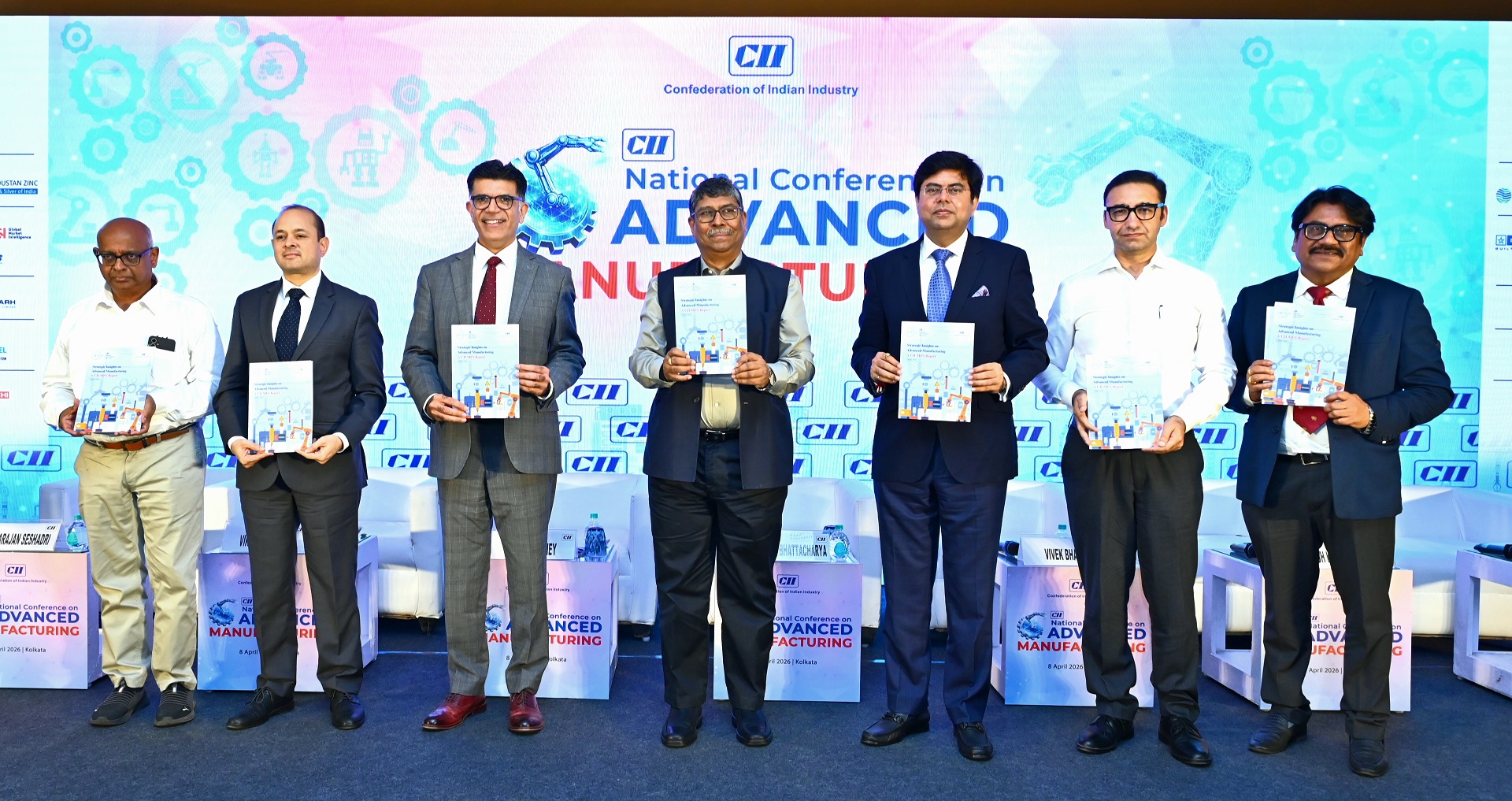
At a time when global supply chains are shifting and technology is redefining production, the Confederation of Indian Industry (CII) brought the spotlight to the future of manufacturing at its National Conference on Advanced Manufacturing held in Kolkata on Wednesday. The conference saw industry leaders and policymakers come together to discuss how India can scale up manufacturing, adopt Industry 4.0 technologies, and strengthen its position in global value chains. Emphasising the importance of such a shift, Mr Sutirtha Bhattacharya, Chairman, WEBEL, Government of West Bengal, stated, “Conferences such as these are points of inflection. The integration of cutting-edge technology with traditional manufacturing processes will drive India’s growth. India has launched several missions in the past; it is now time to introduce the “Advanced Manufacturing Mission.”

Mr Vivek Bhatia, Chairman, CII Mining & Construction Equipment Division (MCED), and Managing Director and Chief Executive Officer, TKIL Industries Private Ltd., emphasised the necessity of manufacturing to scale up—which currently contributes 16% to India’s GDP—if India wants to achieve sustained growth. “The sector remains vulnerable to supply chain disruptions. India has the depth and breadth of talent and market potential. Two key priorities must be emphasised: first, scaling up alongside skilling; and second, expanding the country’s industrial base through technology and innovation,” he said.
Mr Dilip Sawhney, Chairman, CII National Committee on Smart Manufacturing and Managing Director, Rockwell Automation India, said, “Crises in the Middle East are impacting global supply chains and energy, while trade disruptions due to tariffs continue to persist. ” Manufacturing, however, is growing and attracting investments through initiatives such as PLI and deeper integration into global value chains. This is clear proof that the sector is on an upward trajectory, supported by technological advancements. The scale of manufacturing must transition towards greater sophistication, with increased local value addition across the value chain. MSMEs represent the ‘missing middle’ with immense potential, and this gap must be bridged to create an ‘emerging middle’. Connectedness through IoT and AI enables flexibility and drives outcomes such as productivity, safety, quality, resilience, and sustainability. We must explore how a new operating model can evolve through this paradigm.”
Adding further momentum to the discussions, CII also unveiled its report titled ‘Strategic Insights on Advanced Manufacturing – A CII MFS Report’. The report captures how India is steadily moving towards advanced manufacturing, driven by the adoption of Industry 4.0 technologies and a sharper focus on global competitiveness. It offers a clear view of the key trends, emerging technologies, and policy priorities shaping the sector. With strong market knowledge, CII Market Facilitation Services (MFS) has been important in this effort by providing useful data and helping businesses connect more with the industry, making it easier for them to find global opportunities and support India’s move towards a stronger and more technology-focused manufacturing system. With 25+ thought leaders and CEOs deliberating throughout the day on the future of advanced manufacturing and its role in the overall growth and development of manufacturing in India, the conference also featured a series of engaging sessions and panel discussions, including Integrating AI, Automation, IIoT and Unlocking the Power of Data; Beyond the Factory Floor: Innovating the Entire Manufacturing Value Chain; Session on Successful Implementation of Advanced Manufacturing; and Session on Evolving Workforce: Attracting, Reskilling and Retaining Talent in the Tech-Driven World.