


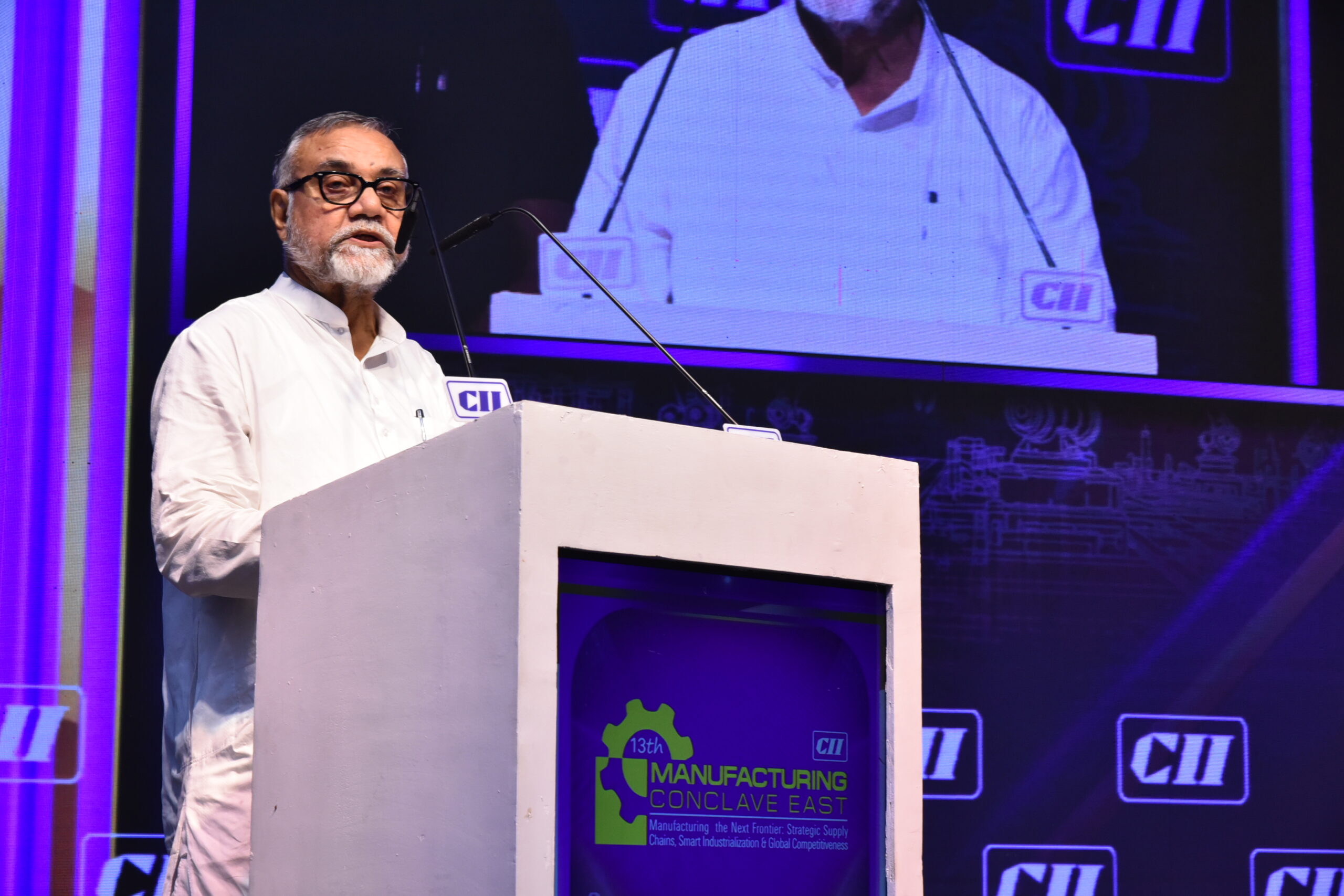
Highlighting the Government of West Bengal’s commitment to making the state a leading industrial destination, Shri Tapas Roy, Hon’ble Minister-in-Charge of the Departments of Industry, Commerce and Enterprises; Public Enterprise and Industrial Reconstruction; and Non-Conventional and Renewable Energy Sources, Government of West Bengal, said at the 13th CII Manufacturing Conclave East, “The Government of West Bengal is committed to creating an industry-friendly ecosystem and is working on a comprehensive roadmap to accelerate industrial growth across the state. The objective is to position West Bengal as a leading industrial destination by 2027 through a transparent and modern industrial policy, supported by investor-centric reforms.”
“A new industrial policy, incorporating a streamlined single-window clearance mechanism, line-based approvals, GIS-enabled land banks, a clear incentive framework, cluster-based industrial development, strengthened logistics infrastructure, and rationalised approval processes, is being finalised. A transparent industrial policy has been prepared, and the government expects to announce the next phase of its industrial roadmap by August,” he said.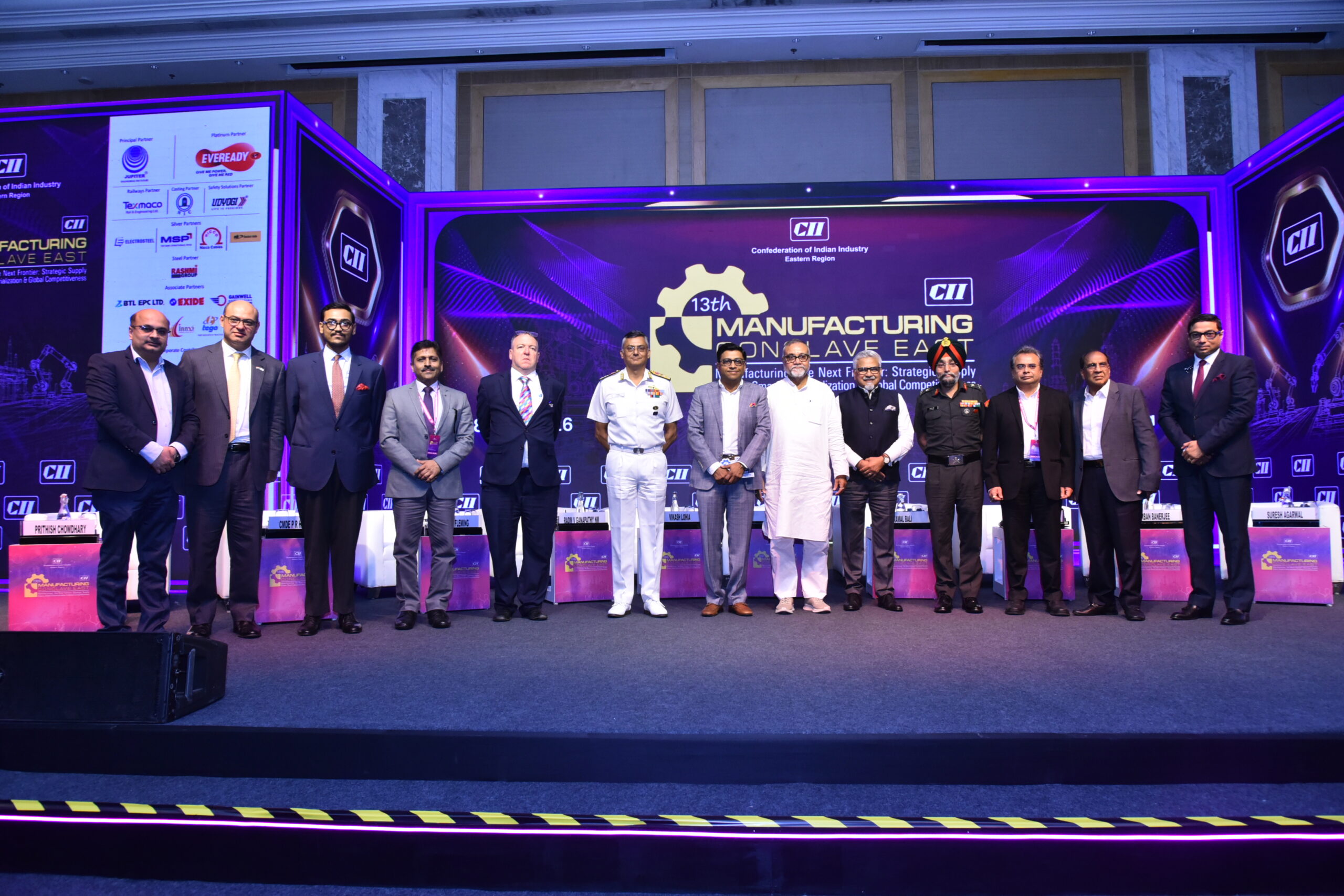
He further added, “West Bengal is also focusing on developing a robust Global Capability Centre (GCC) ecosystem, while a dedicated startup policy is expected to be unveiled soon. In parallel, an expert committee is being constituted to simplify compliance requirements and further enhance the ease of doing business in the state. The vision is to establish West Bengal as the preferred investment destination in Eastern India. The government’s focus extends beyond attracting investments to creating quality employment opportunities and ensuring inclusive economic growth. Work across these initiatives is progressing on a war footing, with employment generation and the state’s overall development remaining the highest priorities. The government stands firmly with industry and remains committed to providing all necessary support to facilitate investment, expansion, and sustainable growth.”
Taking the discussion further, Mr Andrew Fleming, British Deputy High Commissioner, British Deputy High Commission in Kolkata, said, “A new industrial geography is emerging, and East India is well positioned to shape it. The recently concluded India–UK Free Trade Agreement will simplify regulations and reduce the overall cost of doing business. The India–UK FTA is more than just a trade agreement; it is an opportunity for businesses to build stronger collaborations.”
Cmde P. Hari (Retd.), Chairman & Managing Director, GRSE Ltd, said, “Our company plans to invest around ₹2,000 crore in West Bengal over the next few years. Ancillary industries play a critical role in strengthening the defence manufacturing ecosystem. India’s domestic defence manufacturing has grown from around ₹16,429 crore in FY2015 to nearly ₹1.78 lakh crore in the current financial year, demonstrating remarkable progress. While India remains one of the world’s largest defence importers, the goal is to achieve complete self-reliance by 2047, and this is an achievable target. Success will depend on strong alignment between central and state government policies, appropriate incentives, industrial corridors, and greater collaboration between core industries and ancillary units. Many ancillary industries are unaware of the requirements of larger manufacturers; therefore, making awareness and sensitisation essential. Developing dedicated skill boards, improving ease of doing business, and increasing automation will further strengthen the sector.”
“Industry requires a workforce that is trained according to its evolving needs. The Ministry of Defence’s Innovations for Defence Excellence (iDEX) initiative has created an ecosystem to promote innovation and technology development in the defence and aerospace sectors. It supports start-ups, MSMEs, and innovators by funding prototype development and solutions for specific military requirements. There is a need for greater participation from start-ups in Eastern India. iDEX works with four broad categories of innovators: fresh graduates, professionals with industry experience, technology-backed enterprises, and companies with market-ready products. As the Indian Army operates in some of the world’s most challenging geographical conditions, products developed for the defence sector must be designed to perform effectively in these demanding environments,” said Maj. Gen. C. S. Mann, PVSM, AVSM, VSM, Addl. Director General, Army Design Bureau, Indian Army.
Speaking on the evolving global manufacturing landscape and India’s emerging role in it, Mr Kamal Bali, President & Managing Director, Volvo Group, India, said, “The world is witnessing a major geo-economic shift alongside geopolitical changes, with economic power gradually moving from the West to the East. At the same time, technological and ecological transitions are reshaping industries. Manufacturing will play a central role in this transformation. India remains one of the world’s fastest-growing major economies, with GDP growth of around 7.5%, and manufacturing is a key pillar in the country’s journey towards becoming a USD 5 trillion economy. However, improving per capita income remains equally important. The future lies beyond conventional manufacturing. Partnerships will define the next phase of industrial leadership, and India must fully leverage its free trade agreements. The India–EU FTA will provide access to one of the world’s largest economic markets. East India must reimagine its role in this changing global landscape.”
RAdm V. Ganapathy, NM, Addl Director General (QA), Warship Production, Indian Navy, noted, “Defence manufacturing has always been closely linked with heavy engineering, an area in which West Bengal has long-standing strengths. Around 70–75% of the supply chain in most sectors is made up of MSMEs, while the remaining share comprises large enterprises. MSMEs must be institutionalised and supported through better certification systems, while skill development remains critical for enhancing their competitiveness.”
Emphasising the need to increase manufacturing’s contribution to the economy, Mr Suresh Agarwal, Chairman, MSP Steel, highlighted East India’s natural advantage owing to the availability of raw steel and other critical resources. He stressed the importance of building a conducive ecosystem for electric vehicles and leveraging the region’s potential to produce reliable and affordable energy to drive future industrial growth.
Speaking on the changing global manufacturing landscape, Mr Vikash Lohia, Chairman, CII Eastern Region Manufacturing Sub-Committee and Deputy Managing Director, Jupiter Wagons Ltd, said that geopolitical developments have created new opportunities for East India to strengthen its manufacturing and export ecosystem. He said, “As the Indian Ocean becomes increasingly central to global trade, East India has an opportunity to emerge as a key manufacturing and export hub…. The time has come for the East to lead.”
Pointing to West Bengal’s strategic advantages, including its MSME ecosystem and port connectivity, Mr Anirban Banerjee, Co-Chairman, CII Eastern Region Manufacturing Sub-Committee and CEO, Eveready Industries Ltd, said, “Resilience is no longer just a response to challenges; it is a strategic capability.”
The 13th CII Manufacturing Conclave East was organised by the Confederation of Indian Industry (CII) Eastern Region on 18 July 2026 in Kolkata under the theme, “Manufacturing the Next Frontier: Strategic Supply Chains, Smart Industrialisation & Global Competitiveness”. The conclave featured three focused sessions: Integrating into the Global Supply Chain & Addressing Supply Chain Bottlenecks; Indian Defence Manufacturing: A USD 26 Billion Opportunity – Accelerating the Defence Ecosystem; and Traditional Manufacturing: Accelerating Growth in Textiles, Leather, Gems & Jewellery and Handicrafts.